
How Manual Therapy Helps Correct Postural Issues
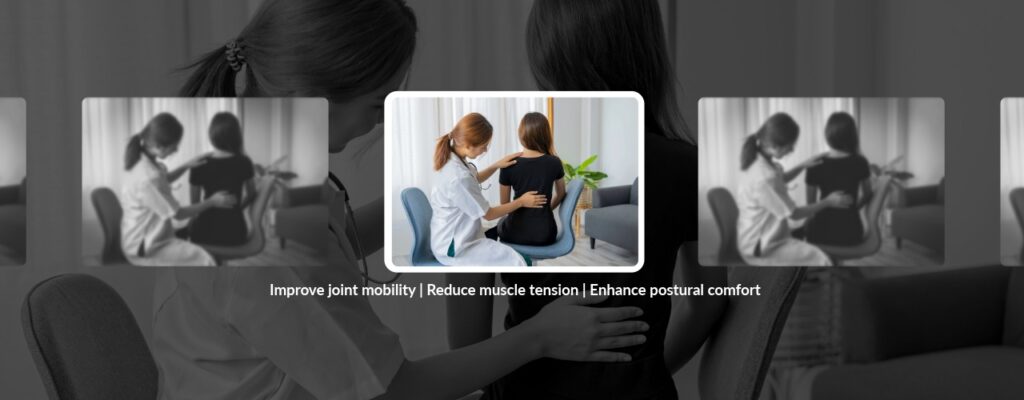

Posture is not about holding your body perfectly straight all day. It is about how comfortably and efficiently your body handles the positions and movements that make up daily life. When stiffness, muscle tension, joint restrictions, or movement habits make certain positions uncomfortable, manual therapy for postural issues may help address some of the physical factors contributing to the problem.
A Hands-On Approach to Better Movement
Manual therapy refers to hands-on techniques performed by a physical therapist to address muscles, joints, and other soft tissues.
Rather than simply telling you to sit or stand straighter, our physical therapists can evaluate how different areas of your body move and identify restrictions that may be affecting your comfort or movement options. We can then select the best manual therapy techniques for your needs, which might include:
- Soft tissue techniques to address areas of muscle tightness and improve tissue mobility.
- Joint mobilization to help improve mobility in joints that are stiff or restricted.
- Manual stretching to help improve flexibility in muscles that limit comfortable movement.
- Myofascial techniques to improve mobility in the connective tissues surrounding muscles and other structures.
We typically combine manual therapy with therapeutic exercise, movement education, and strategies that help you carry improvements into everyday activities.
Six Ways Manual Therapy for Postural Issues Can Support Your Progress
Postural concerns rarely come down to a single tight muscle or a single position. They often involve a combination of mobility, strength, endurance, movement habits, and the demands placed on your body throughout the day. Here are six ways hands-on care may help.
1. It Can Improve Mobility in Stiff Joints
When areas such as the upper back, neck, shoulders, or hips do not move comfortably, your body may compensate elsewhere.
For example, limited mobility in the upper back can influence how you position your head and shoulders while working at a computer. Joint mobilization may help improve motion in restricted areas, giving your body more comfortable movement options.
By improving mobility, manual therapy for postural issues can help prepare the body for exercises that reinforce better movement.
2. It Can Address Muscle Tightness
Long periods in one position can contribute to stiffness and muscle tension. Some people notice this most in the neck, chest, shoulders, or hips.
Soft tissue techniques may help reduce feelings of tightness and make movement more comfortable. They can also help prepare muscles for strengthening and mobility exercises.
The goal is not to force muscles into a particular position but to help restore comfortable movement so you can move with less restriction.
3. It Can Make Exercise More Comfortable
Exercise is often an important part of addressing postural concerns, but stiffness or discomfort can make certain movements challenging at first. Manual therapy can help reduce those barriers.
When a joint moves more freely or a tight area feels less restricted, it may become easier to perform mobility, strengthening, and movement-control exercises. This is one reason manual therapy for postural issues is often most useful when paired with an active rehabilitation program.
4. It Can Help Reduce Pain That Changes How You Move
Pain can influence the way you sit, stand, reach, bend, and walk. You might shift your weight, avoid turning your head, or hold your shoulders differently without realizing it.
Hands-on techniques may help reduce pain for some patients, particularly when used alongside exercise and education. As symptoms improve, your physical therapist can help you gradually practice more comfortable and confident movement patterns.
5. It Can Target the Areas Your Body Is Compensating For
The area that feels uncomfortable is not always the only area contributing to the problem.
For example, shoulder discomfort may be influenced by upper back mobility. Hip stiffness may affect how you move through the pelvis and lower back.
A physical therapist looks at the bigger picture rather than treating posture as a single body part. This individualized approach helps determine where manual therapy may be useful and where strengthening, mobility work, or changes to daily habits may be more important.
6. It Can Support More Comfortable Daily Habits
Manual therapy alone does not permanently correct posture, nor is there one perfect posture everyone should maintain. Instead, the goal is often to improve your ability to move between positions comfortably.
After using manual therapy to address relevant stiffness or discomfort, your therapist may recommend strategies that you can apply in your day-to-day life, such as regularly changing positions during the workday or becoming more aware of movements that aggravate symptoms.
This combination helps turn short-term improvements from manual therapy for postural issues into practical changes you can use outside the clinic.
Better Posture Starts With More Movement Options
Postural concerns are often more complex than simply remembering to sit up straight. Your mobility, strength, work environment, daily activities, and symptoms can all influence how your body feels in different positions.
At Suncare Therapy, Inc, your physical therapist can evaluate these factors and develop a plan based on your individual needs. Manual therapy may be used alongside exercise, education, and movement training to help you feel more comfortable and capable during the activities that matter to you.
If stiffness, discomfort, or postural concerns are interfering with your work or daily routine, contact Suncare Therapy, Inc to learn how personalized physical therapy can help you move with greater comfort and confidence.